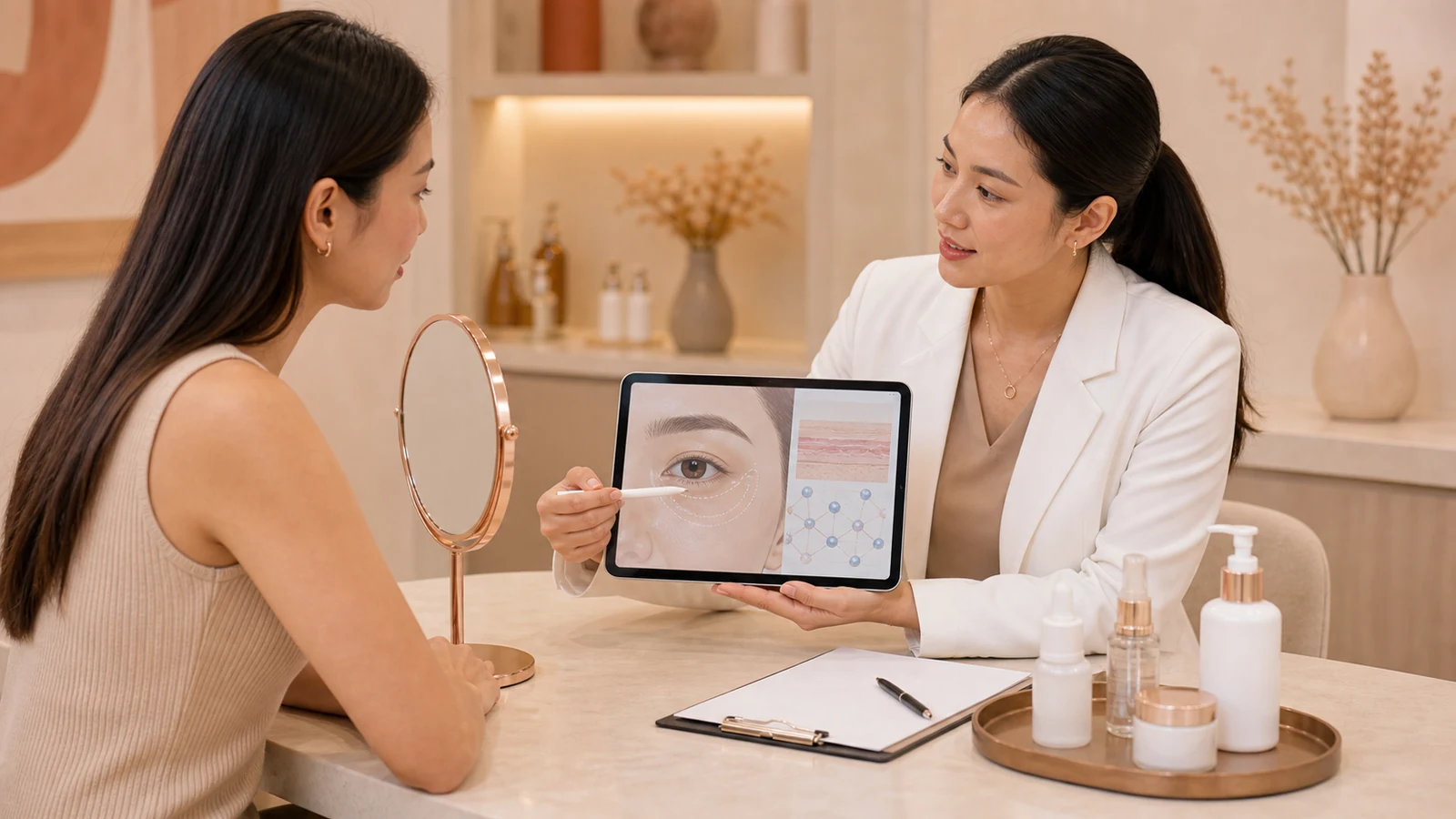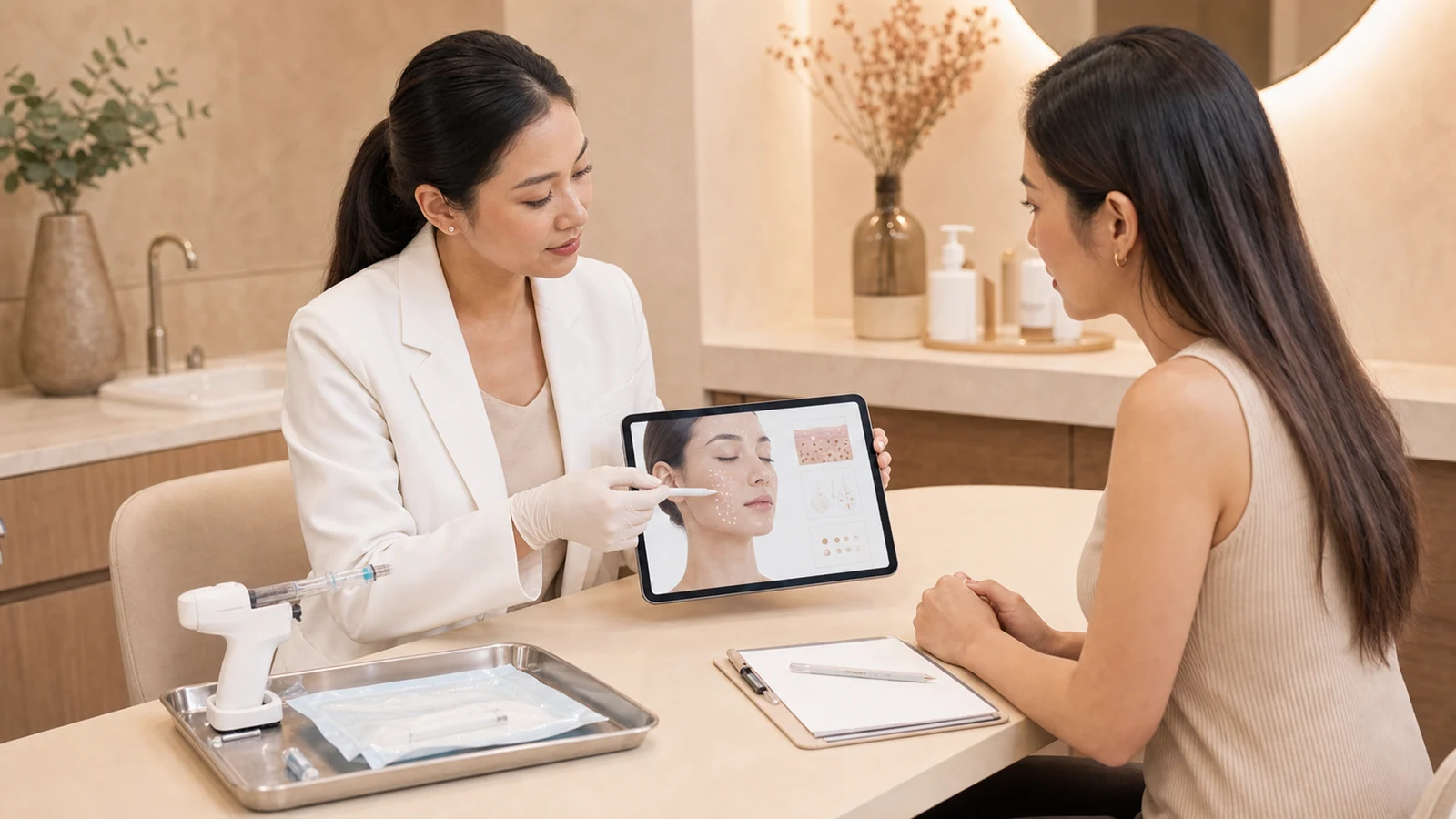
Acne scar treatment planning should consider active breakouts, scar type, skin tone, pigmentation risk, and realistic progress.


Introduction
Before choosing a treatment for acne scars, there are a few things worth understanding first — because the right plan depends on more than just picking a procedure.
When someone finally decides they’re ready to do something about their acne scars, the instinct is often to jump straight to research mode: which laser, which clinic, how many sessions, how soon. And that enthusiasm makes complete sense — acne scars can take a real toll on how you feel about your skin, and wanting to get started feels urgent.
But here’s the thing that often gets missed in that research phase: acne scar treatment is genuinely not one-size-fits-all. The type of scars you have, whether your acne is still active, your skin tone, and how your skin tends to respond to irritation all shape what a safe and effective plan actually looks like. Skipping that assessment step doesn’t speed things up — it often slows them down, or leads to a treatment that doesn’t quite address the right concern.
This article walks through the key factors that go into a proper acne scar treatment plan, so you know what to expect going into a consultation and what questions are worth raising.
First Things First: Is Your Acne Still Active?
This is one of the most important questions your provider will want to understand early on — and it’s worth thinking about before you arrive.
If you’re still experiencing regular breakouts, treating scars from previous ones while new marks are forming can feel a bit like trying to fill a bucket with a hole in it. In some cases, getting active acne under better control is an important first step before diving into scar-focused treatment. That doesn’t necessarily mean putting everything on hold indefinitely — but it does mean the order of care matters, and a thoughtful plan will account for this.
Your provider can assess what you’re currently dealing with and advise on the most logical sequence of steps for your skin.
Scar Type Matters More Than You Might Think
Not all acne scars are the same — and this is one of the most common sources of confusion when people are researching treatment options online. The terminology gets blurred, and it can be hard to know whether what you’re looking at in the mirror is a scar, a mark, or something else entirely.
Here’s a simple way to think about it:
Textural scars are the ones that affect the surface of your skin — narrow pitted scars, broader depressions, or in some cases raised or thickened areas. These involve a change in the skin’s structure.
Flat dark marks — sometimes called post-inflammatory hyperpigmentation — are the discolouration left behind after a breakout heals. The skin’s texture is smooth, but the tone is uneven. These are not technically scars, and they often respond to a completely different type of treatment.
Red or purple marks are a version of this, where the colour is more pink or purple than brown, often seen in earlier stages of healing.
Mixed concerns — textural scarring and pigmentation together — are also common, and this is where a thorough assessment is especially valuable, because a plan that addresses one without the other may leave you with results that feel incomplete.
Knowing which of these applies to your skin helps your provider choose an approach that actually targets the right thing.

Why Your Skin Tone Is Part of the Equation
Skin tone isn’t just a consideration for which shades suit you — in the context of aesthetic treatment, it genuinely affects how certain procedures interact with your skin and what risks need to be managed.
Some skin tones are more prone to post-inflammatory hyperpigmentation, meaning that irritation or trauma to the skin — even from a treatment intended to improve things — can trigger new dark marks if not carefully managed. This shapes everything from which device settings are appropriate, to how aggressively a treatment can be delivered, to how strict the aftercare and sun protection requirements will be.
A good provider will take your skin tone into account from the start and explain how it influences the plan rather than applying the same approach to everyone who walks through the door.
Why Scar Type Matters
Different scar types may need different approaches. Some scars are narrow and deep. Some are broader depressions. Others may be raised or thickened. Flat dark marks after acne are not the same as textural scars.
A consultation should identify whether the concern is:
- Textural acne scars
- Flat dark marks
- Red or purple marks
- Raised scars
- Mixed scarring and pigmentation
This helps avoid choosing a treatment that targets the wrong problem.
What Realistic Progress Looks Like
One of the most important expectations to calibrate before starting treatment is the timeline. Acne scar improvement — particularly for textural scarring — is gradual. It builds over multiple sessions and continues to develop as the skin heals and regenerates in the weeks after each treatment.
There’s no laser or rejuvenation procedure that can guarantee complete scar removal. That’s not a limitation unique to any one clinic or device — it’s simply the nature of how scar tissue responds to treatment. What a well-planned course of treatment can do is create meaningful, visible improvement over time, with each session building on the progress of the last.
How much improvement is realistic for your specific scars, in what timeframe, and with which treatment — that’s the kind of honest, personalised conversation to have during your consultation. And if a provider can’t give you a clear answer to those questions, it may be worth asking them again.
Questions To Ask During Consultation
- Is my acne still active?
- What scar type do I have?
- Are these scars, dark marks, or both?
- Is Pico Peak, Laser, or Rejuvenation and Scar Management appropriate?
- What improvement is realistic?
- What aftercare reduces pigmentation risk?
- How should sun exposure be managed?
- How will progress be reviewed?
Sources
- Affiner Rejuvenation and Scar Management service page
- Affiner Pico Peak service page
- Affiner Laser service page
- American Academy of Dermatology acne scar treatment guide
- Mayo Clinic laser resurfacing overview
FAQs
Should active acne be treated before acne scars?
Often, active acne should be considered first because new breakouts can keep creating new marks or scars. A consultation can help prioritize.
Can laser remove acne scars completely?
No treatment should guarantee complete scar removal. Improvement depends on scar type, skin response, and treatment planning.
Are dark marks the same as acne scars?
No. Dark marks are usually pigment or color changes, while scars often involve texture or structure.
Why is sunscreen important after scar treatment?
Sun exposure can worsen pigmentation risk, especially after procedures that make skin more sensitive.