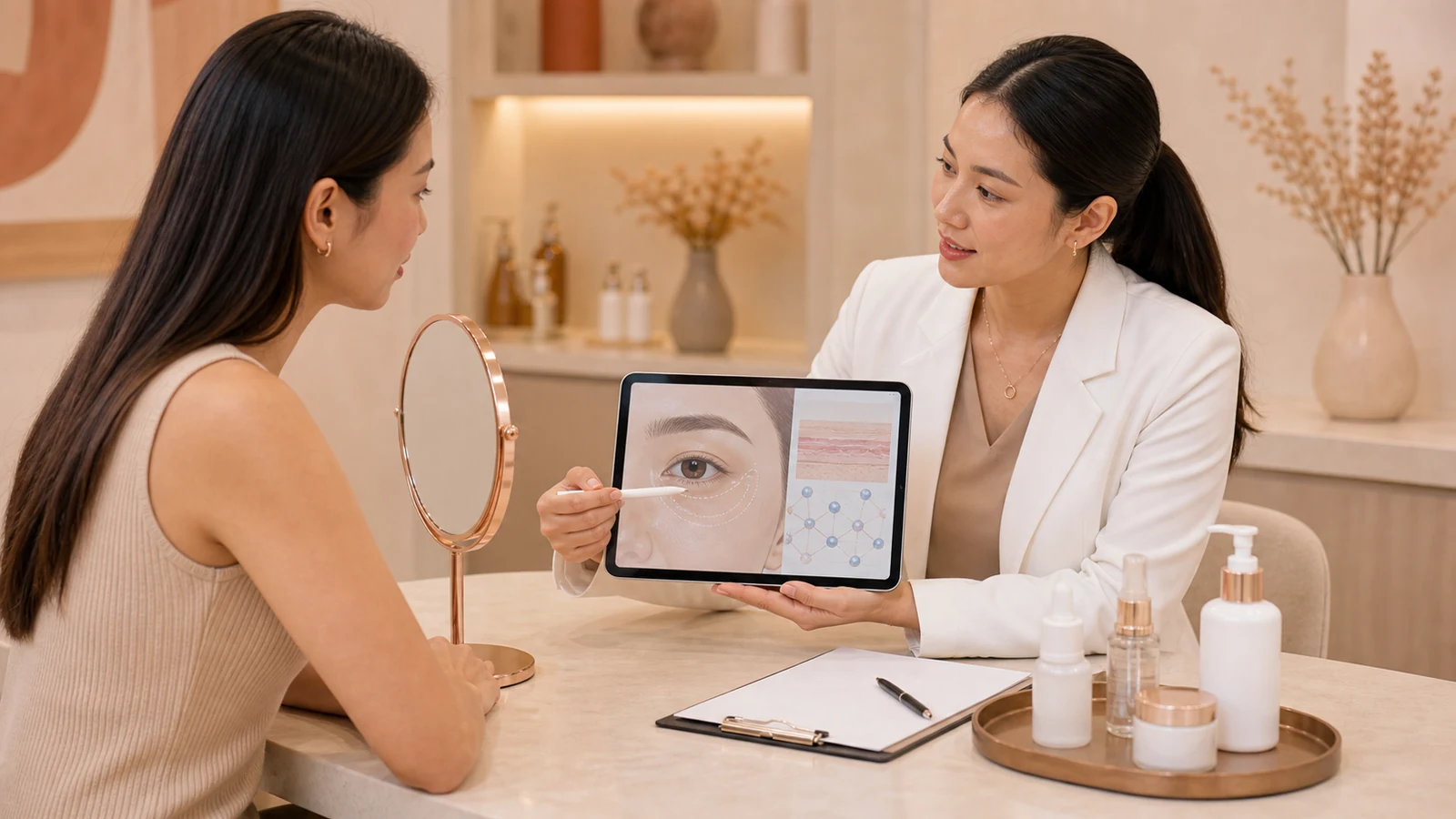
Sensitive skin can still need care, but the plan should be gentle and personalized. Learn what to tell your clinic before booking a facial.


Introduction
If you have sensitive skin, you’ve probably learned the hard way that not every product — and not every treatment — is going to agree with you. Maybe you’ve had a reaction to something that seemed perfectly gentle. Maybe your skin flares up without obvious reason. Maybe you’ve held back from booking a facial because you weren’t sure how your skin would respond.
Those concerns are completely valid, and they’re exactly why the most important part of a facial for sensitive skin isn’t the treatment itself — it’s the conversation that happens before it.
What Your Clinic Actually Needs to Know
When you arrive at a consultation, the more openly you can share about your skin, the better your provider can tailor a plan that works with your skin rather than against it. Here are the things worth mentioning:
- Reactions to skincare products. If certain moisturisers, toners, or serums make your skin sting, burn, or break out — share that. It tells your provider a lot about where your barrier currently stands and which ingredients to steer clear of.
- Active flaking, peeling, or redness. A compromised or inflamed skin barrier isn’t just uncomfortable; it also means that treatments which might ordinarily be perfectly fine could cause unnecessary irritation. If your skin is in a reactive state on the day of your appointment, your provider may suggest a gentler approach or recommend postponing.
- Recent use of retinoids or exfoliating acids. Products like retinol, AHAs, and BHAs are wonderful for skin renewal, but they also make the skin more sensitive for a period of time. Let your clinic know when you last used these so they can factor that into the plan.
- Previous procedures. Had a recent peel, laser session, or microneedling treatment? That history matters. Your skin may still be in a recovery phase even if it looks fine on the surface.
- Known conditions like eczema, rosacea, or a history of allergies. These don’t automatically disqualify you from having a facial — but they do shape what a safe, appropriate plan looks like. A good clinic will want to know.
If you’re unsure what to share, a simple rule of thumb: if it’s ever affected how your skin behaves, it’s worth mentioning.

A Word on Choosing Your Treatment
It can be tempting — especially when you’re excited about results — to gravitate towards the strongest option on the menu. The most potent peel, the most intensive scrub, the brightening add-on with the longest list of actives. But for sensitive skin, more aggressive doesn’t mean more effective. In fact, it often means more recovery time, more reactivity, and results that don’t last as long because the skin barrier has been pushed too hard.
A calmer, more targeted approach that focuses on comfort and barrier support will almost always serve you better in the long run. Trust your provider’s recommendation over a menu description — they can see your skin in person, and they’ll know what it’s ready for.
What to tell the clinic
Mention if your skin burns with products, if you have active flaking, if you recently used retinoids or exfoliating acids, if you had a procedure, or if you have a history of eczema, rosacea, acne treatment, or allergies. The clinic may need to adapt the facial or advise a consultation first.
What to avoid asking for
Avoid choosing the strongest peel, scrub, extraction session, or brightening add-on just because it sounds more dramatic. Sensitive skin often benefits from a calmer plan focused on comfort and barrier support.
Questions to bring to Affiner
- What service category does my concern fit: facial, laser, Pico Peak, diode, pigmentation care, or rejuvenation and scar management?
- Is my skin ready for treatment today, or should irritation, tanning, breakouts, or product sensitivity be addressed first?
- What results are realistic for my concern, and what would make you adjust the plan?
- What should I avoid before and after the session?
- When should I return for review instead of trying to manage a reaction on my own?
FAQs
Should I bring my skincare products to a facial consultation?
Yes. A product list can help the clinic spot possible irritants or ingredients that may need pausing.
Can sensitive skin be exfoliated?
Sometimes, but the method and timing matter. The clinic should decide based on skin condition and history.
What if my skin is currently irritated?
It may be better to postpone or choose a simpler plan. A clinic review is the safer route.
Sources
- Affiner Clinic – Facial
- American Academy of Dermatology – Dermatologists’ top tips for relieving dry skin
- American Academy of Dermatology – Face washing 101
- American Academy of Dermatology – How to safely exfoliate at home
Make an Appointment
If you are considering this treatment, schedule a consultation with Affiner Aesthetic Clinic so the team can assess your skin, explain suitability, and build a plan around your concern. Make an Appointment.